
Water Restoration
A clear path from urgent water removal through verified drying, cleaning, and repair planning for La Mesa properties.
Explore service
When water moves through walls, floors, or cabinets, the safe response starts now. Get help with extraction, drying, cleanup, and a clear repair plan.
Start with the problem in front of you. Each service page explains the warning signs, process, cost factors, and safe next steps.
A clear path from urgent water removal through verified drying, cleaning, and repair planning for La Mesa properties.
Explore serviceRepair planning for walls, ceilings, floors, cabinets, and finishes after the source is controlled and the structure is dry.
Explore servicePrompt standing-water removal with safety screening, moisture mapping, and a drying plan for the materials water reached.
Explore serviceFlood cleanup for storm intrusion, surface runoff, plumbing releases, and multi-room water events, with contamination-aware decisions.
Explore serviceContamination-aware sewage removal, cleaning, material decisions, odor control, and drying for homes and businesses.
Explore serviceMoisture-source investigation, containment, material removal, cleaning, and prevention planning for visible or suspected mold.
Explore serviceStabilization, soot and odor cleaning, contents planning, firefighting-water drying, and repair coordination after a fire.
Explore serviceEmergency stabilization and cleanup after roof leaks, wind-driven rain, runoff, fallen debris, and weather-related water intrusion.
Explore service
A calm response separates immediate stabilization from the decisions that can wait until the property is understood.
Screen electricity, ceilings, sewage, and access. Coordinate plumbing, roofing, or drain correction.
Check adjoining rooms and concealed layers instead of stopping at the visible stain.
Match methods to the source and materials, then use readings to guide progress.
Connect the dry-out with a written, sequenced scope for walls, floors, cabinets, or finishes.
Protect people first. Then limit the spread and preserve the facts that a plumber, restoration scope, or insurance review may need.
Use the fixture shutoff or main valve when you can reach it without entering standing water or an unsafe area.
Do not enter water near outlets or equipment, and keep away from a sagging, wet, or changing ceiling.
Capture wide views, close details, the source if visible, and every room or level the water may have reached.
Move small valuables from a safe area. Do not use a household vacuum on standing water or disturb water that may contain sewage.
The strongest trust signal is a process you can understand, question, and document.
The plan follows the water path and material readings, not surface appearance alone.
Photos, scope details, and progress records keep owners and claim contacts working from the same facts.
Start with people, electricity, ceilings, contamination, and safe source control—then address the building.
You get practical next steps and honest scope factors without unsupported credentials or one-price-fits-all claims.
A responsible estimate follows the source, wet perimeter, materials, and work required. A fixed price before those facts are known is only a guess.
A clean supply leak, appliance discharge, outside runoff, and sewage require different safety, cleaning, and disposal decisions.
One open room differs from water beneath cabinets, continuous flooring, several units, or concealed wall and floor layers.
Drywall, plaster, hardwood, insulation, cabinets, and subfloor each change the access, drying, cleaning, and replacement scope.
Equipment, monitoring, selective removal, source repair, contents work, and reconstruction should be separated so each cost is understandable.
La Mesa’s housing and terrain shape what gets wet, where it hides, and how repairs should be sequenced.
Fletcher Hills and Grossmont homes can hide supply leaks beneath continuous flooring and wall plates.
Mt. Helix, the Highlands, and nearby foothill properties require attention to runoff, retaining features, and lower rooms.
La Mesa Village, Rolando, Date Avenue, and University Avenue call for selective access and occupant coordination.
23 cities and communities, 12 La Mesa neighborhoods, and 10 eastern San Diego neighborhoods each have a dedicated search target.
Practical reading for the questions people ask when a room is wet and the clock feels loud.
Protect people, stop the source, document conditions, and begin the right kind of drying without creating a second problem.
Read guide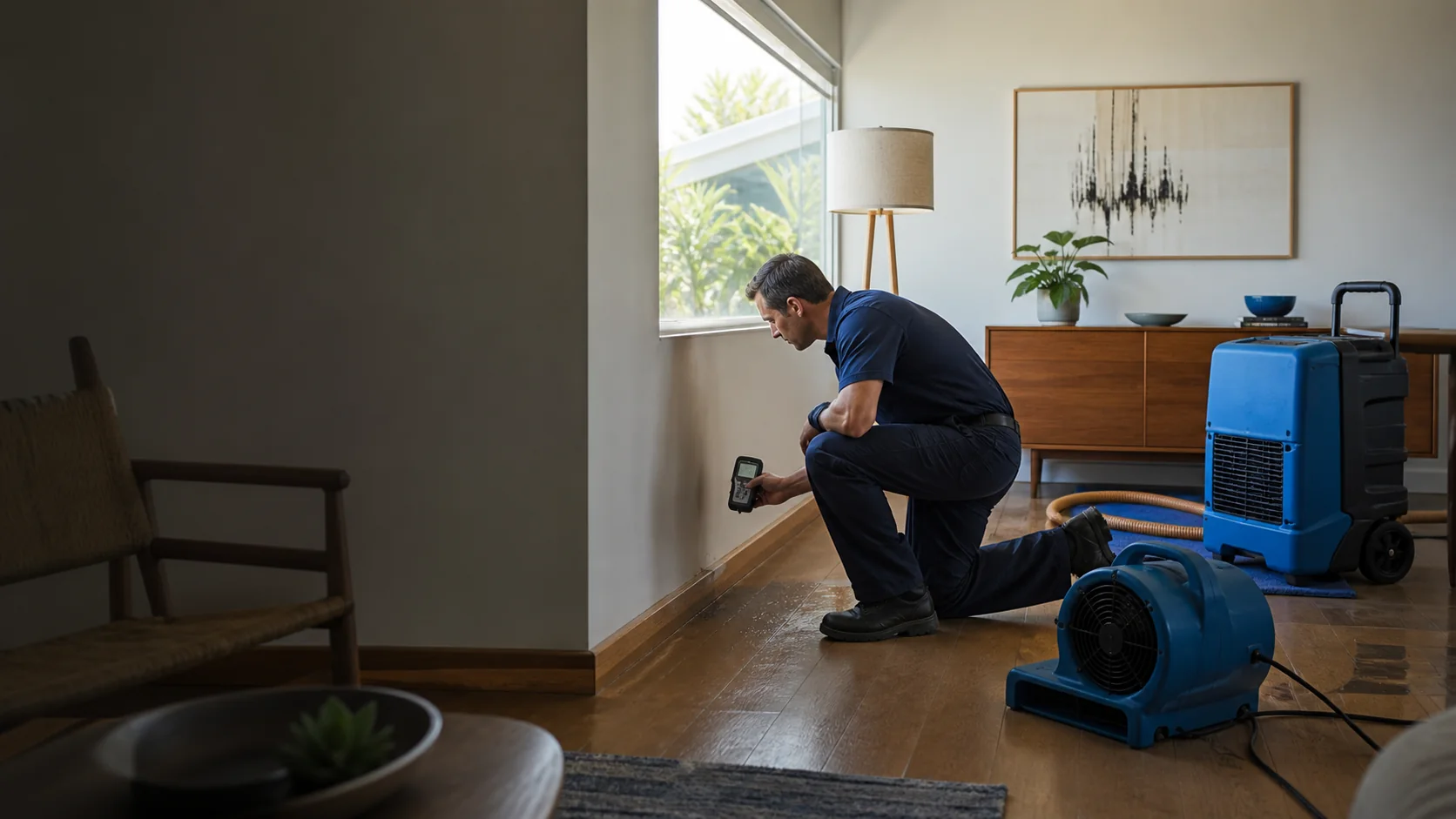
The right first call depends on the source and immediate hazard. Use this simple triage order.
Read guide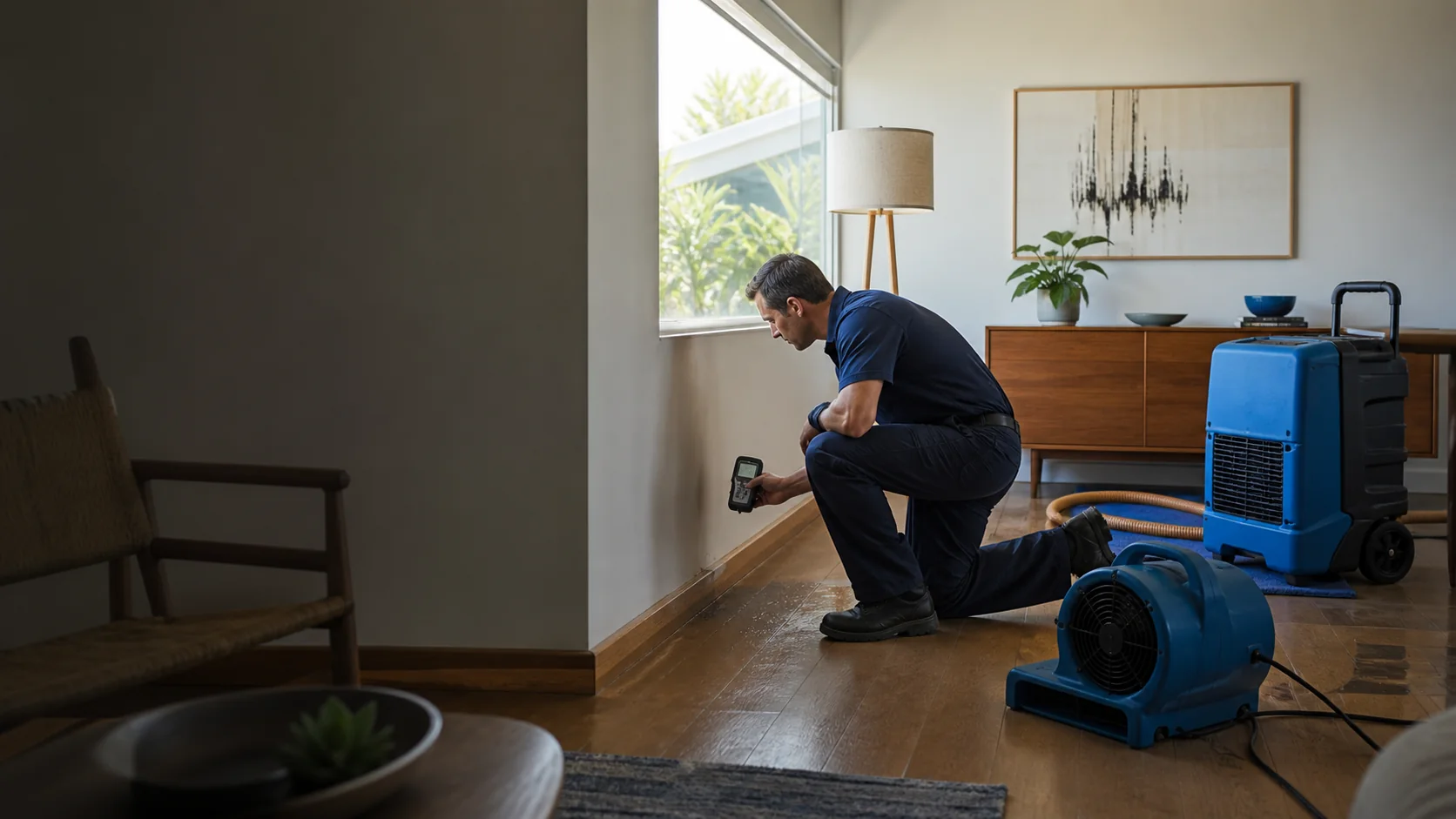
What to do when a warm floor, moving meter, damp baseboard, or hidden water suggests a leak beneath the slab.
Read guideCall 24/7 for an active water emergency or send the property details for an assessment request.
Start here, then call when the source, safety, or wet area is unclear.
Need a human now?+1 (201) 277-9344
If it is safe, stop the water at the fixture or main shutoff, keep away from wet electrical areas, and call for help. Photograph the affected rooms before moving items. Do not use a household vacuum on standing water, and do not enter water that may contain sewage.
It can be. Water may continue moving through drywall, cabinets, insulation, and flooring after the visible flow ends. An assessment helps determine what is actually wet and whether extraction, controlled drying, or material removal is needed.
Drying time depends on the amount of water, the materials involved, indoor conditions, and how quickly work begins. A responsible drying plan is based on moisture readings rather than a fixed promise. Equipment placement and readings may be adjusted as the property responds.
No. Clean-water events caught quickly may allow some materials to dry in place. Heavily saturated, deteriorated, or contaminated materials may need removal. The water source, exposure time, construction, and moisture measurements guide that decision.
Policies often treat sudden and accidental water differently from gradual leaks, maintenance problems, groundwater, or flooding. Coverage is determined by the policy and carrier. Photos, moisture readings, an itemized scope, and saved receipts can make the review easier.
A restoration assessment may use non-invasive moisture meters, penetrating meters where appropriate, thermal imaging as a screening tool, and direct inspection of cavities. Thermal patterns must be confirmed with moisture readings because temperature differences alone do not prove water is present.
Mold risk rises when materials stay damp. The practical goal is to stop the source, remove standing water, begin controlled drying promptly, and verify that affected assemblies are returning to an appropriate dry condition. Musty odors or recurring discoloration deserve investigation.
Yes. The emergency line is available 24/7. Describe the source, affected rooms, water depth, electrical concerns, and whether sewage may be involved so the next steps can be prioritized.
Call now for immediate guidance, or send the details for an assessment request.