
Secure, dry, and repair

Storm Damage Restoration in La Mesa, CA

Emergency stabilization and cleanup after roof leaks, wind-driven rain, runoff, fallen debris, and weather-related water intrusion.

24/7 emergency calls La Mesa address Homes & businesses
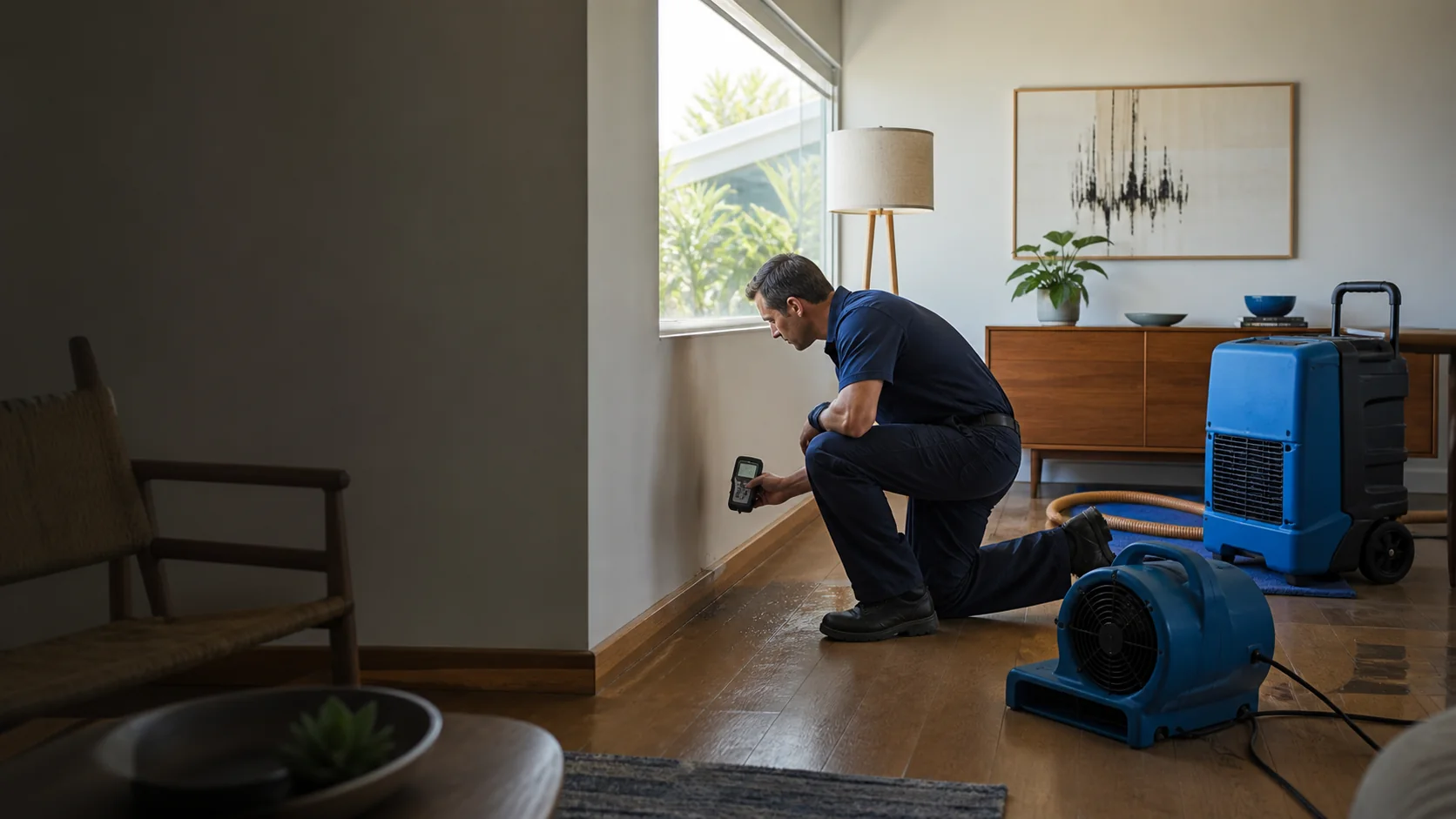
Storm water intrusion restoration at a La Mesa home
01

Control the source and screen hazards.

02

Trace water beyond the visible area.

03

Dry, clean, and verify before repair.

When to take action

Signs you may need storm damage

One sign can have several causes. A pattern of source evidence and material changes tells a more useful story.

01

Ceiling stain grows during rain

Active staining, bubbling paint, or sagging material indicates ongoing intrusion and possible overhead hazards.

02

Water at doors or garage

Runoff may be overcoming thresholds, drains, grading, or downspout discharge.

03

Damp attic or insulation

Roof entry can spread along decking, framing, and insulation before appearing in the room below.

04

Damage after wind

Lifted roofing, displaced flashing, broken branches, and wind-driven rain can create multiple entry points.

Specific deliverables

What storm damage includes

The exact boundary follows the source and materials. A complete proposal should still account for each of these work streams.

Safe temporary protection

After conditions permit, the plan prioritizes openings, active entry points, damaged finishes, electrical exposure, and safe access. Temporary protection is documented and does not replace permanent roof or envelope repair.

Interior and exterior pathway assessment

Roof details, windows, doors, grading, drains, wall transitions, and uphill runoff are considered with the interior wet pattern. The visible ceiling stain may not sit directly below the entry point.

Water and debris cleanup

Bulk water, loose debris, and affected contents are addressed according to contamination and material condition. Outside runoff or backed-up drainage can require different handling than clean interior leakage.

Dry-out and repair coordination

Moisture mapping connects temporary protection with structural drying, roofing or drainage findings, and finish repairs. Repeat rain risk is considered before assemblies are closed.

Expert scope insight

A tarp or patched opening can stop new entry without drying what already migrated inside. Keep the temporary-protection record, exterior photos, and interior moisture map together. If the weather changes again, that baseline helps distinguish continuing entry from moisture already stored in the assembly.

A controlled sequence

How the restoration process moves forward

The source and materials change the tactics. The decision order stays consistent.

Source professionals and restoration professionals solve connected—but different—parts of the loss.

  1. 01

    Check immediate hazards

    Avoid unstable ceilings, wet electrical fixtures, roof work in unsafe weather, and areas affected by fallen limbs.

  2. 02

    Limit further entry

    Arrange safe temporary protection or source repair where conditions allow.

  3. 03

    Extract and map water

    Remove standing water and trace wet insulation, walls, flooring, and adjoining areas.

  4. 04

    Dry the assembly

    Create access and a controlled drying plan based on the roof, ceiling, wall, and floor materials involved.

  5. 05

    Correct the pathway

    Coordinate permanent roofing, flashing, drainage, window, or grading work before closing repairs.

Honest estimate logic

What affects the scope and cost

An exact price without the source and wet perimeter is a guess. These are the factors a responsible scope should address.

Entry point

A small flashing repair differs from broad roof damage, broken openings, or runoff entering at grade.

Overhead access

Wet insulation, high ceilings, attic access, and fragile materials can change labor and protection needs.

Water path

Intrusion may cross several framing bays or levels before it becomes visible.

Exterior correction

Permanent roof, gutter, drainage, or envelope repairs are separate from interior drying and finishes.

Ask for a written scope

Separate emergency work, drying, source repair, contents, and reconstruction so you can see what is included and what could change.

Request an assessment
Verified reasons to call

Why choose Water Damage La Mesa for storm damage

These are the service facts this site can support today—without invented awards, review totals, certifications, or response-time guarantees.

24/7 emergency calls

The published line is available day and night, so active water, sewage, ceiling movement, and electrical concerns can be described when they are discovered.

Verified La Mesa address

The business name, address at 8139 Center St, La Mesa, CA 91942, and phone number remain consistent across the page, contact form, and structured data.

Safety-first triage

Guidance starts with people, utilities, contamination, structure, and safe access before cleanup or equipment is discussed.

Clear scope boundaries

Source repair, emergency mitigation, drying, contents, and reconstruction are explained as connected but separate decisions.

Local service coverage

Storm Damage across La Mesa and nearby communities

Water Damage La Mesa provides a direct call path from its La Mesa address for homes and businesses throughout East County and nearby San Diego communities. Local pages explain building and water-loss context for Fletcher Hills properties, Mt. Helix hillside homes, and El Cajon water damage restoration. Coverage also includes Lemon Grove, Santee, Spring Valley, La Presa, Rancho San Diego, National City, Chula Vista, and the additional neighborhoods listed in the complete service-area directory.

When you call, share the property location, safe access details, likely source, rooms or levels involved, and whether the water is active. The conversation can then separate immediate safety and source control from the storm damage scope the building may need.

Before you choose a scope

Storm Damage questions

Use these answers to understand the work and ask better questions during an assessment.

Need help now?+1 (201) 277-9344

Should I climb onto the roof during a leak?

No when the roof is wet, windy, steep, damaged, or otherwise unsafe. Control interior hazards and arrange qualified exterior help instead.

Can a ceiling collapse after a roof leak?

Heavily saturated ceiling materials can lose strength. Stay out from beneath sagging or bulging areas and avoid puncturing them without a controlled safety plan.

Will the roof repair dry the ceiling by itself?

Stopping entry is essential, but insulation, framing, and drywall may remain wet. Those materials should be assessed and dried or removed as conditions require.

What storm photos are useful?

Photograph exterior conditions from the ground, active drips, ceiling and wall patterns, water depth, affected contents, and temporary measures. Do not risk injury for a photo.

Should interior drying wait until permanent roof or exterior repairs are complete?

Not always. Safe temporary protection may allow assessment and drying to begin while permanent work is scheduled. The sequence depends on whether new water can be controlled, whether access is safe, and whether opening materials would expose the property to more weather.

24/7 emergency calls

Call for storm damage help in La Mesa

Tell us the source, rooms, and immediate hazards. You will get a clear next step for the property.

Call nowRequest help