
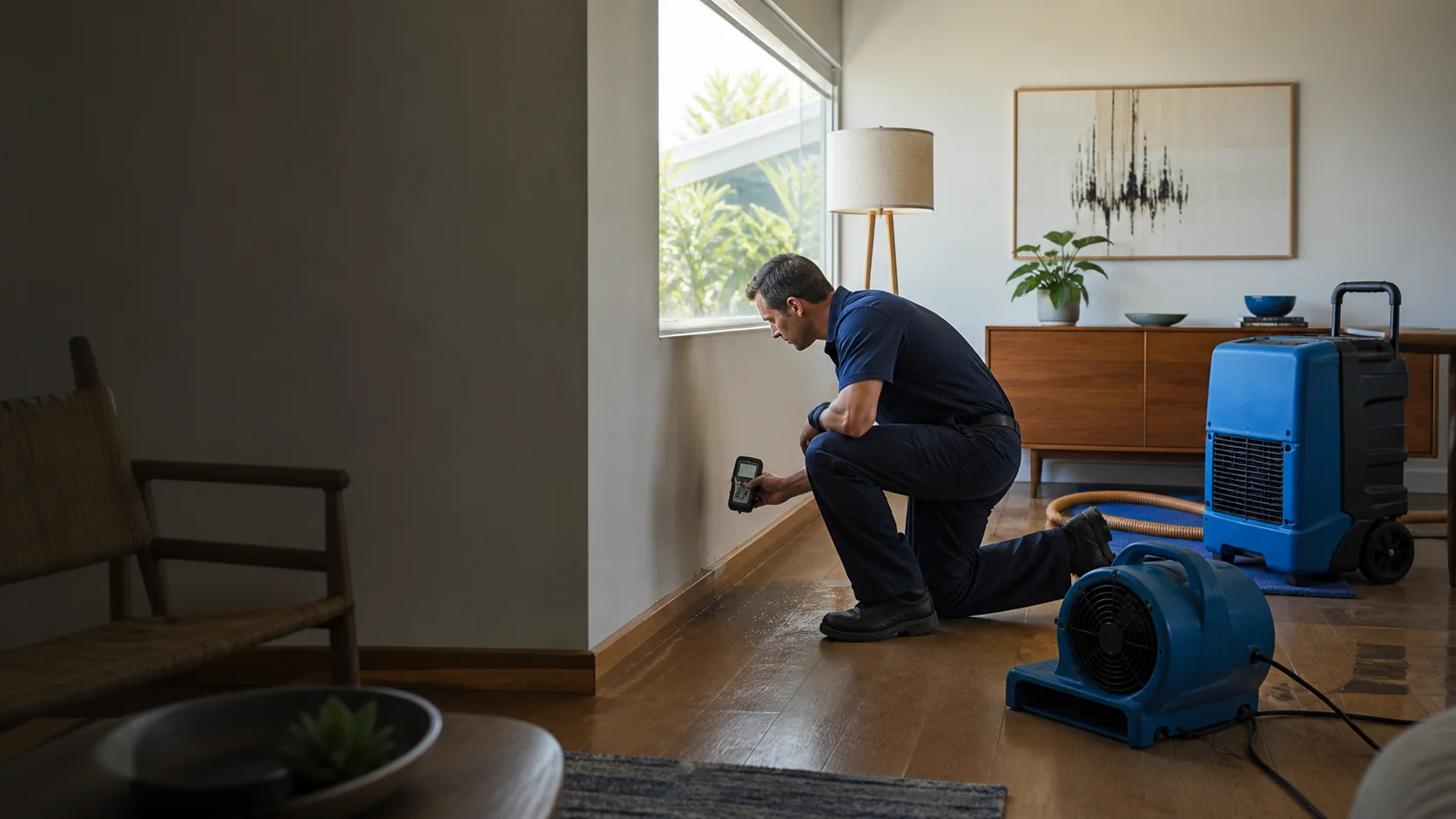
The January 2024 San Diego flooding was a reminder that a generally dry climate does not eliminate flood risk. Short, intense rain can overwhelm streets, channels, drains, and property grading before owners have time to improvise.
La Mesa and East County properties can use those lessons without assuming every neighborhood has the same exposure.
General guidance cannot clear an unsafe property. Stay away from energized water, sewage, moving floodwater, and sagging materials.
Know how water approaches the building
Watch the property during ordinary rain. Identify downspout discharge, low driveway points, patio drains, retaining-wall flow, door thresholds, garage slopes, and places where neighboring runoff crosses the lot. Correcting a concentrated pathway can matter more than adding random barriers.
Keep critical items above the floor
Garages and lower rooms often hold documents, photos, electronics, tools, and cardboard storage directly on concrete. Shelving, water-resistant bins, and a simple contents inventory reduce both damage and claim confusion.
Separate rain intrusion from clean plumbing water
Outside water can collect soil, debris, sewage, oils, and other contaminants. That changes decisions about carpet, drywall, insulation, contents, and safe cleanup. Do not assume clear-looking runoff is sanitary.
Create a shutoff and communication plan
Label the main water valve, know the electrical panel location, save emergency contacts, and decide who can authorize work for a rental or business. During a regional storm, clear information helps responders prioritize the event.
Document safely
Photograph water depth, entry points, street or yard conditions from a safe place, affected rooms, and contents. Do not enter moving water, drive flooded roads, climb a wet roof, or stand beneath wet ceilings to obtain evidence.
- Clean gutters and verify downspout discharge.
- Test accessible drains before the rainy season.
- Review insurance and any separate flood coverage.
- Keep valuables and emergency supplies above likely water levels.
- Use leak alarms where an interior plumbing failure is also a concern.
How to apply this guide to a La Mesa property
The right response to January 2024 San Diego flood lessons begins with conditions at the building, not a generic checklist alone. Note whether the source is a pressurized supply, fixture or drain, water heater, appliance, roof, outside runoff, or an unknown pathway. Then record every room or level that may connect to it. A slab-on-grade Fletcher Hills home, a historic Rolando cottage, a Mt. Helix hillside property, and an apartment near Date Avenue may show the same stain for very different reasons. That building context determines which professional should stop the source and which finishes need closer moisture assessment.
When you request help, describe what changed and when: active flow, meter behavior, odor, warm flooring, material swelling, ceiling movement, recent rain, drain response, or a prior repair. Share whether electricity, sewage, tenants, customers, valuable contents, or limited access are involved. This allows the first conversation to focus on hazards and source control before equipment or repair decisions. For this topic, the most directly connected service paths are Flood Cleanup, Storm Damage, Water Extraction. Each addresses a different phase, so ask who is responsible for source repair, mitigation, monitoring, cleaning, contents, and reconstruction.
Document the property before cleanup changes the scene. Take wide photographs, close views, and a short video that establishes the relationship between the source and affected rooms. Keep a timeline, receipts, removed parts, source-trade findings, moisture records, and written scopes. If insurance may be involved, report the event according to the policy and ask what the carrier needs before damaged material is discarded. A contractor can explain observed conditions and recommended work; only the carrier can interpret coverage.
Finally, use the repair phase to prevent a repeat. Confirm that plumbing, roofing, drainage, ventilation, or appliance corrections were tested before finishes close the assembly. Ask what measurements support dry-out, what materials were retained or removed and why, and how continuous flooring, cabinets, plaster, or historic finishes affect the repair boundary. Flood preparation is a property-specific exercise. Follow the water path, protect critical contents, understand coverage, and call promptly if rain reaches interior finishes or contaminated runoff enters the building.
- Protect people before protecting finishes.
- Stop or isolate the source when that can be done safely.
- Map the water beyond the most visible mark.
- Separate emergency mitigation from permanent repair.
- Keep one organized record from discovery through closeout.
The bottom line
Flood preparation is a property-specific exercise. Follow the water path, protect critical contents, understand coverage, and call promptly if rain reaches interior finishes or contaminated runoff enters the building.