Water Damage Restoration FAQ
Use these answers to understand the first decisions, then call when the source, safety, or true wet area remains uncertain.
Clear enough to act on
Every answer avoids fixed promises that depend on the source, materials, property, policy, or verified company credentials.
Need immediate guidance?+1 (201) 277-9344
What should I do first after finding water damage?
If it is safe, stop the water at the fixture or main shutoff, keep away from wet electrical areas, and call for help. Photograph the affected rooms before moving items. Do not use a household vacuum on standing water, and do not enter water that may contain sewage.
Is water damage an emergency even when the leak has stopped?
It can be. Water may continue moving through drywall, cabinets, insulation, and flooring after the visible flow ends. An assessment helps determine what is actually wet and whether extraction, controlled drying, or material removal is needed.
How long does structural drying usually take?
Drying time depends on the amount of water, the materials involved, indoor conditions, and how quickly work begins. A responsible drying plan is based on moisture readings rather than a fixed promise. Equipment placement and readings may be adjusted as the property responds.
Can wet drywall and flooring always be saved?
No. Clean-water events caught quickly may allow some materials to dry in place. Heavily saturated, deteriorated, or contaminated materials may need removal. The water source, exposure time, construction, and moisture measurements guide that decision.
Does homeowners insurance cover water damage?
Policies often treat sudden and accidental water differently from gradual leaks, maintenance problems, groundwater, or flooding. Coverage is determined by the policy and carrier. Photos, moisture readings, an itemized scope, and saved receipts can make the review easier.
How do professionals look for hidden moisture?
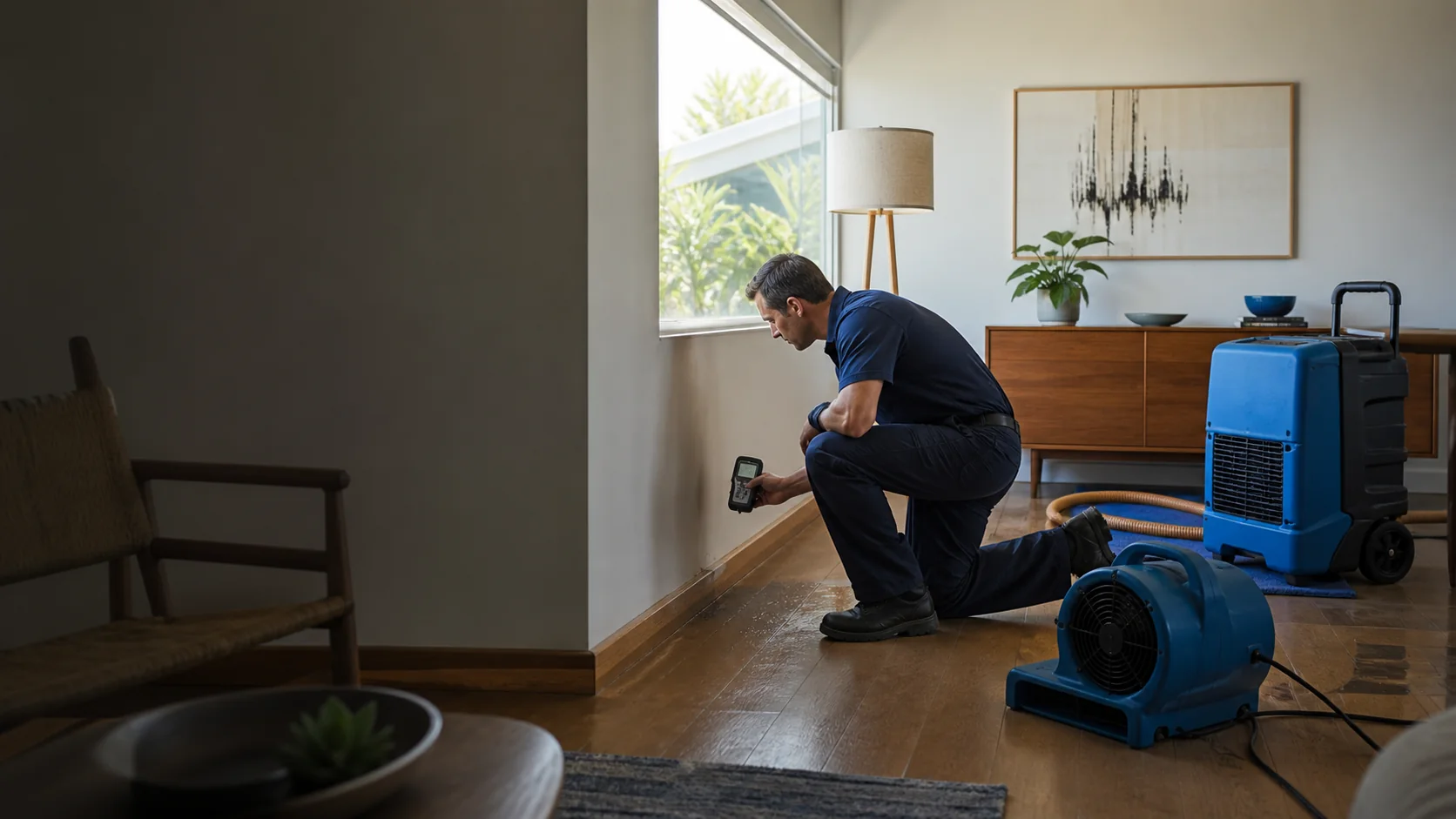
A restoration assessment may use non-invasive moisture meters, penetrating meters where appropriate, thermal imaging as a screening tool, and direct inspection of cavities. Thermal patterns must be confirmed with moisture readings because temperature differences alone do not prove water is present.
When does mold become a concern after a leak?
Mold risk rises when materials stay damp. The practical goal is to stop the source, remove standing water, begin controlled drying promptly, and verify that affected assemblies are returning to an appropriate dry condition. Musty odors or recurring discoloration deserve investigation.
Do you take calls at night and on weekends?
Yes. The emergency line is available 24/7. Describe the source, affected rooms, water depth, electrical concerns, and whether sewage may be involved so the next steps can be prioritized.
Water is moving. Your next step should be, too.
Call now for immediate guidance, or send the details for an assessment request.