Dry first, repair once

Water Damage Repair in La Mesa, CA

Repair planning for walls, ceilings, floors, cabinets, and finishes after the source is controlled and the structure is dry.

24/7 emergency calls La Mesa address Homes & businesses
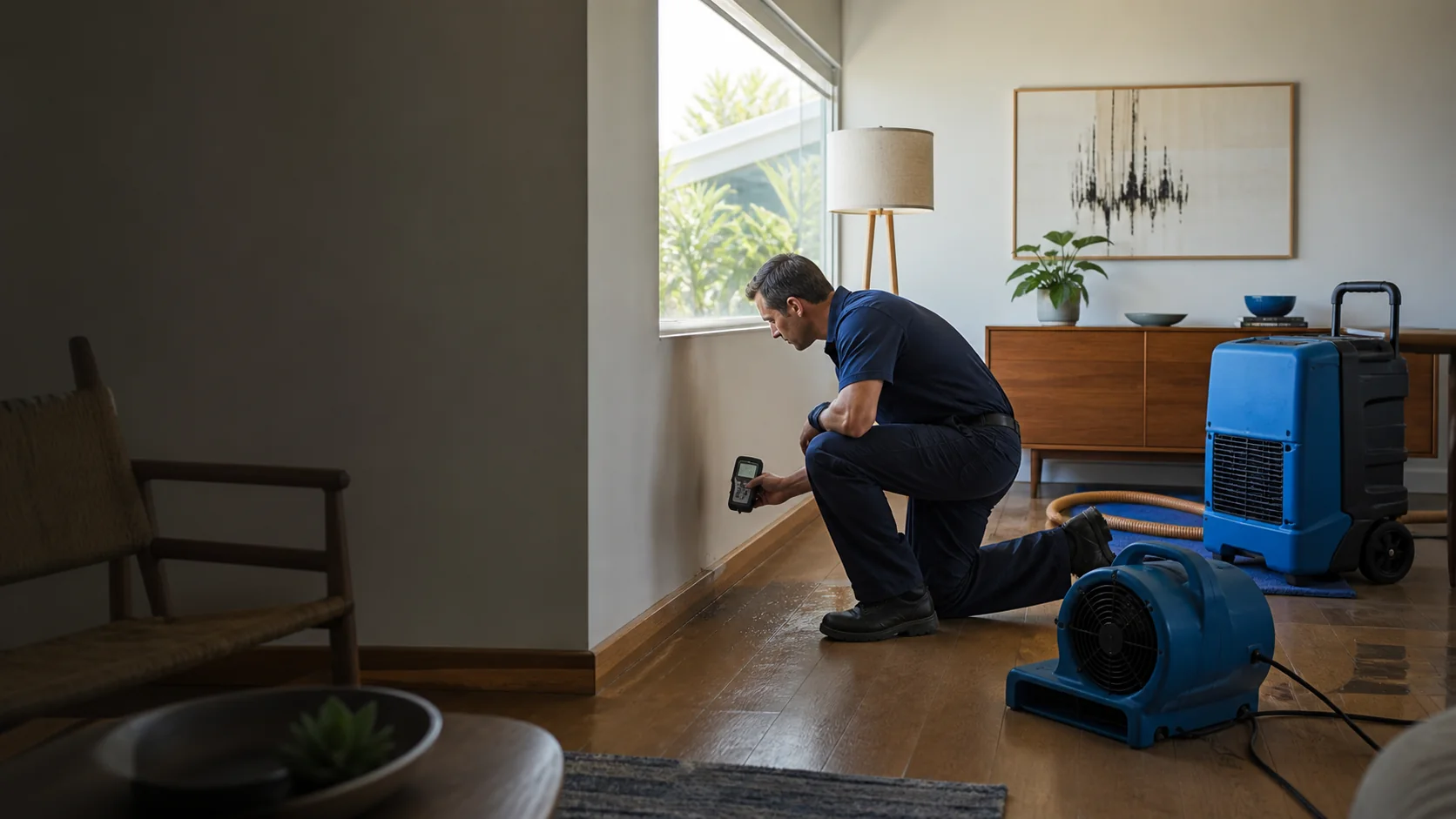
Repair work on water-damaged walls and flooring in La Mesa
01

Control the source and screen hazards.

02

Trace water beyond the visible area.

03

Dry, clean, and verify before repair.

When to take action

Signs you may need damage repair

One sign can have several causes. A pattern of source evidence and material changes tells a more useful story.

01

Staining returns

A stain that reappears after painting suggests the source or underlying moisture was not fully resolved.

02

Floors cup or release

Wood, laminate, and resilient flooring may distort or lose adhesion after water moves beneath the finished surface.

03

Drywall loses strength

Soft gypsum, torn facing, swelling, or a sagging ceiling can require removal instead of surface patching.

04

Cabinets swell

Composite cabinet components can expand after wetting, while solid wood pieces may be candidates for controlled drying.

Specific deliverables

What damage repair includes

The exact boundary follows the source and materials. A complete proposal should still account for each of these work streams.

Repair-boundary assessment

The scope separates staining from material failure and identifies where drywall, flooring, cabinets, trim, or insulation can remain. Moisture evidence and source records should set the boundary, not the easiest demolition line.

Dryness verification before closure

Repair begins only after the source is corrected and the assembly is ready to close. Readings from comparable materials help prevent new finishes from covering a damp cavity or trapping moisture below a floor.

Finish and transition planning

Continuous flooring, cabinet runs, textured walls, plaster, tile, and paint can extend the visible repair beyond the wettest spot. The plan explains transitions and matching constraints before materials are ordered.

Trade sequence and closeout

Plumbing, electrical, carpentry, drywall, flooring, and painting may need a specific order. A written handoff shows what source work is complete, what was removed, and which surfaces are ready for reconstruction.

Expert scope insight

The most durable repair scope starts at the source record and works outward through each affected layer. Replacing a baseboard does not resolve wet insulation, and replacing drywall does not prove a slab or supply leak was corrected. Ask what was tested before closure, how finish continuity affects the boundary, and who owns each trade handoff.

A controlled sequence

How the restoration process moves forward

The source and materials change the tactics. The decision order stays consistent.

Source professionals and restoration professionals solve connected—but different—parts of the loss.

  1. 01

    Confirm the source repair

    Verify the plumbing, roofing, drainage, or appliance problem has been addressed before closing the assembly.

  2. 02

    Document dry conditions

    Use material-appropriate readings and comparisons so repairs are not installed over unresolved moisture.

  3. 03

    Define selective removal

    Preserve sound materials where practical while creating the access needed for a durable repair.

  4. 04

    Rebuild in sequence

    Coordinate framing, insulation, wall finishes, cabinets, flooring, and paint so new work is not damaged by later trades.

  5. 05

    Complete a closeout check

    Review finish consistency, function, cleanliness, and any remaining owner or claim documentation.

Honest estimate logic

What affects the scope and cost

An exact price without the source and wet perimeter is a guess. These are the factors a responsible scope should address.

Finish matching

Historic plaster, continuous flooring, custom millwork, and discontinued materials can expand the repair area.

Assembly depth

A surface patch costs less than work involving insulation, framing, subfloor, or concealed plumbing access.

Contamination

Sewage or long-standing water can change cleaning, containment, disposal, and replacement requirements.

Code and access needs

Opening an assembly may reveal conditions that require safe access, permits, or trade coordination.

Ask for a written scope

Separate emergency work, drying, source repair, contents, and reconstruction so you can see what is included and what could change.

Request an assessment
Verified reasons to call

Why choose Water Damage La Mesa for damage repair

These are the service facts this site can support today—without invented awards, review totals, certifications, or response-time guarantees.

24/7 emergency calls

The published line is available day and night, so active water, sewage, ceiling movement, and electrical concerns can be described when they are discovered.

Verified La Mesa address

The business name, address at 8139 Center St, La Mesa, CA 91942, and phone number remain consistent across the page, contact form, and structured data.

Safety-first triage

Guidance starts with people, utilities, contamination, structure, and safe access before cleanup or equipment is discussed.

Clear scope boundaries

Source repair, emergency mitigation, drying, contents, and reconstruction are explained as connected but separate decisions.

Local service coverage

Damage Repair across La Mesa and nearby communities

Water Damage La Mesa provides a direct call path from its La Mesa address for homes and businesses throughout East County and nearby San Diego communities. Local pages explain building and water-loss context for Fletcher Hills properties, Mt. Helix hillside homes, and El Cajon water damage restoration. Coverage also includes Lemon Grove, Santee, Spring Valley, La Presa, Rancho San Diego, National City, Chula Vista, and the additional neighborhoods listed in the complete service-area directory.

When you call, share the property location, safe access details, likely source, rooms or levels involved, and whether the water is active. The conversation can then separate immediate safety and source control from the damage repair scope the building may need.

Before you choose a scope

Damage Repair questions

Use these answers to understand the work and ask better questions during an assessment.

Need help now?+1 (201) 277-9344

Can water-damaged drywall be patched?

Sometimes. A small clean-water opening in otherwise sound, dry drywall may be patchable. Soft, crumbling, contaminated, or repeatedly wet gypsum generally needs a broader repair.

When can flooring be reinstalled?

After the subfloor and surrounding assembly meet an appropriate dry standard and the source is corrected. Installing too soon can trap moisture or damage replacement materials.

Does every repair require removing cabinets?

No. The decision depends on cabinet construction, how far water traveled, access to the wall or floor behind the units, and whether materials can be dried and cleaned in place.

Why separate mitigation and repair estimates?

They describe different phases and unknowns. Early emergency work limits damage; the final repair scope is clearer after access and moisture conditions are documented.

Can repairs start as soon as the room feels dry?

Not necessarily. Surface feel does not confirm that subfloors, framing, insulation, or cabinet voids are ready to close. Repair timing should follow source correction, material-specific readings, cleaning needs, and any required access for other trades.

24/7 emergency calls

Call for damage repair help in La Mesa

Tell us the source, rooms, and immediate hazards. You will get a clear next step for the property.

Call nowRequest help