Water Extraction & Removal: from the first wet surface to a complete plan
Extraction removes bulk water so affected materials can begin drying. It is usually the fastest way to reduce continued migration into seams, wall bases, carpet cushion, subfloor, and belongings. The correct method depends on water depth, debris, contamination, power conditions, and the surface being extracted.
A pump may be appropriate for deeper standing water, while weighted extraction tools can remove water held in carpet and pad. Hard surfaces, tight edges, and cavities may require different attachments or access. Extraction is not the end of the job: porous materials can retain significant moisture after no puddles remain.
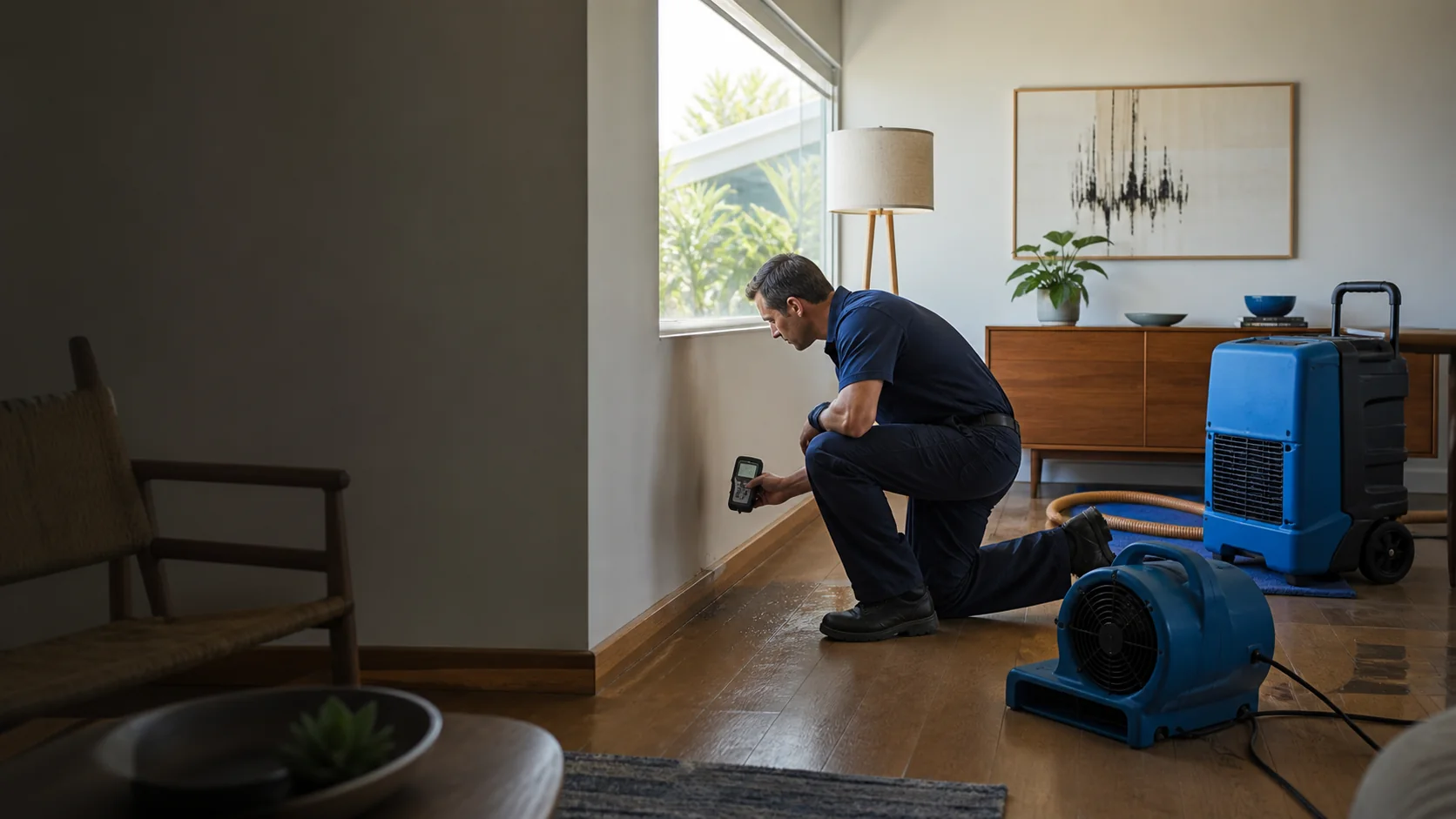
The follow-through matters. After bulk removal, the wet footprint should be mapped, contents protected, and a drying environment established. Moisture checks identify where evaporation and dehumidification are still needed and whether trapped layers require additional access.
Stay away from standing water near electricity, sewage, or a changing ceiling. Call for immediate guidance rather than entering an unsafe area.