Assessment to recovery

Water Damage Restoration in La Mesa, CA

A clear path from urgent water removal through verified drying, cleaning, and repair planning for La Mesa properties.

24/7 emergency calls La Mesa address Homes & businesses
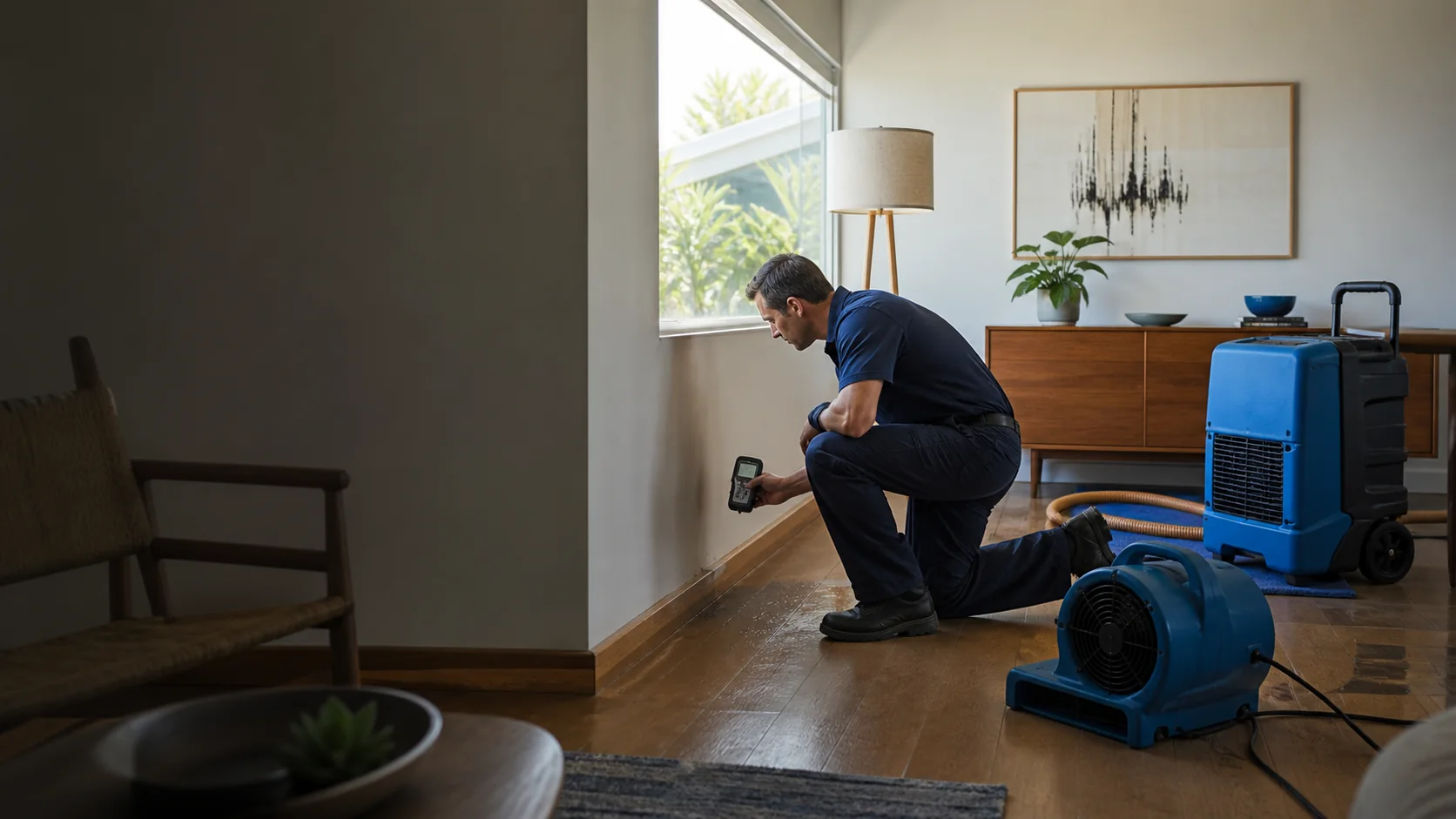
Water damage restoration equipment operating in a La Mesa home
01

Control the source and screen hazards.

02

Trace water beyond the visible area.

03

Dry, clean, and verify before repair.

When to take action

Signs you may need water restoration

One sign can have several causes. A pattern of source evidence and material changes tells a more useful story.

01

Standing or spreading water

Water at baseboards, beneath flooring, or moving into adjacent rooms calls for prompt containment and extraction.

02

Soft or swollen materials

Bubbling paint, sagging drywall, lifting floor edges, and swollen cabinets often indicate moisture below the visible surface.

03

Persistent damp odor

A musty or earthy smell after a leak can point to wet cavities or materials that have not returned to a dry condition.

04

Unclear source

When the source is not obvious, assessment comes before cosmetic repairs so the same damage does not recur.

Specific deliverables

What water restoration includes

The exact boundary follows the source and materials. A complete proposal should still account for each of these work streams.

Loss and water-category assessment

The first scope identifies the likely source, elapsed time, affected rooms, material layers, and whether the water appears clean, gray, or contaminated. That classification changes access, cleaning, and material decisions.

Extraction and moisture mapping

Standing water is removed where appropriate, then meters are used to trace moisture into wall bases, cabinets, subfloors, insulation, and adjoining rooms. Bulk removal and structural drying are related tasks, but they are not the same task.

Controlled drying and cleaning

Equipment and access decisions respond to the materials that are actually wet. Surfaces are cleaned according to the source condition, while progress readings show whether retained materials are moving toward an acceptable dry state.

Contents and repair handoff

The plan identifies contents that need protection or relocation, materials that can remain, and finishes that may require repair. Closeout records connect the emergency phase to plumbing, reconstruction, property-management, or insurance follow-up.

Expert scope insight

A room can look dry after the visible water is gone while moisture remains below continuous flooring, behind a base cabinet, or inside a shared wall. The useful checkpoint is not appearance alone; it is whether the mapped materials are stable enough for cleaning, reassembly, and finish repair. Ask the scope to state which areas were checked, which materials are being monitored, and what evidence will support closeout.

A controlled sequence

How the restoration process moves forward

The source and materials change the tactics. The decision order stays consistent.

Source professionals and restoration professionals solve connected—but different—parts of the loss.

  1. 01

    Safety and source control

    Identify electrical, ceiling, contamination, and slip hazards; stop the incoming water when that can be done safely.

  2. 02

    Moisture assessment

    Trace the path of water with visual inspection and appropriate meters, using thermal imaging only as a screening aid.

  3. 03

    Extraction and stabilization

    Remove standing water, protect contents, and isolate affected zones when contamination or dust control requires it.

  4. 04

    Controlled drying

    Place air movement and dehumidification according to the assembly, then adjust the plan as measurements change.

  5. 05

    Cleaning and repair plan

    Clean salvageable surfaces, identify materials that cannot remain, and define the build-back work after drying goals are met.

Honest estimate logic

What affects the scope and cost

An exact price without the source and wet perimeter is a guess. These are the factors a responsible scope should address.

Water category

Clean supply water, appliance discharge, and sewage require different safety controls and material decisions.

Affected materials

Drywall, hardwood, cabinets, insulation, and layered floors differ in access, drying time, and salvage potential.

Area and access

A small open room is different from water beneath built-ins, inside a chase, or across several levels.

Repair scope

Costs change when the project includes demolition, contents handling, specialty cleaning, or reconstruction after dry-out.

Ask for a written scope

Separate emergency work, drying, source repair, contents, and reconstruction so you can see what is included and what could change.

Request an assessment
Verified reasons to call

Why choose Water Damage La Mesa for water restoration

These are the service facts this site can support today—without invented awards, review totals, certifications, or response-time guarantees.

24/7 emergency calls

The published line is available day and night, so active water, sewage, ceiling movement, and electrical concerns can be described when they are discovered.

Verified La Mesa address

The business name, address at 8139 Center St, La Mesa, CA 91942, and phone number remain consistent across the page, contact form, and structured data.

Safety-first triage

Guidance starts with people, utilities, contamination, structure, and safe access before cleanup or equipment is discussed.

Clear scope boundaries

Source repair, emergency mitigation, drying, contents, and reconstruction are explained as connected but separate decisions.

Local service coverage

Water Restoration across La Mesa and nearby communities

Water Damage La Mesa provides a direct call path from its La Mesa address for homes and businesses throughout East County and nearby San Diego communities. Local pages explain building and water-loss context for Fletcher Hills properties, Mt. Helix hillside homes, and El Cajon water damage restoration. Coverage also includes Lemon Grove, Santee, Spring Valley, La Presa, Rancho San Diego, National City, Chula Vista, and the additional neighborhoods listed in the complete service-area directory.

When you call, share the property location, safe access details, likely source, rooms or levels involved, and whether the water is active. The conversation can then separate immediate safety and source control from the water restoration scope the building may need.

Before you choose a scope

Water Restoration questions

Use these answers to understand the work and ask better questions during an assessment.

Need help now?+1 (201) 277-9344

What is the difference between mitigation and restoration?

Mitigation limits ongoing damage through source control, extraction, containment, and drying. Restoration includes cleaning and the repairs needed to return affected rooms to usable condition.

Can a room look dry while materials are still wet?

Yes. Paint, flooring, and cabinet faces may appear dry while moisture remains in backing, subfloor, insulation, or wall cavities. Measurements help verify conditions that sight and touch can miss.

Should I remove wet drywall myself?

Avoid opening walls until electrical and contamination risks are understood. Unplanned demolition can spread debris, disturb older materials, or remove evidence useful for documenting the loss.

What records should I keep?

Keep photos, videos, dates, receipts, appliance or plumbing reports, moisture documentation, and written scopes. Your insurer decides coverage, but organized records make the facts easier to review.

What is the difference between water extraction and complete water damage restoration?

Extraction removes standing or pooled water. Complete restoration also addresses moisture hidden in materials, appropriate cleaning, drying checks, contents, and the repair sequence. A property may need little extraction but still need substantial structural drying.

24/7 emergency calls

Call for water restoration help in La Mesa

Tell us the source, rooms, and immediate hazards. You will get a clear next step for the property.

Call nowRequest help