
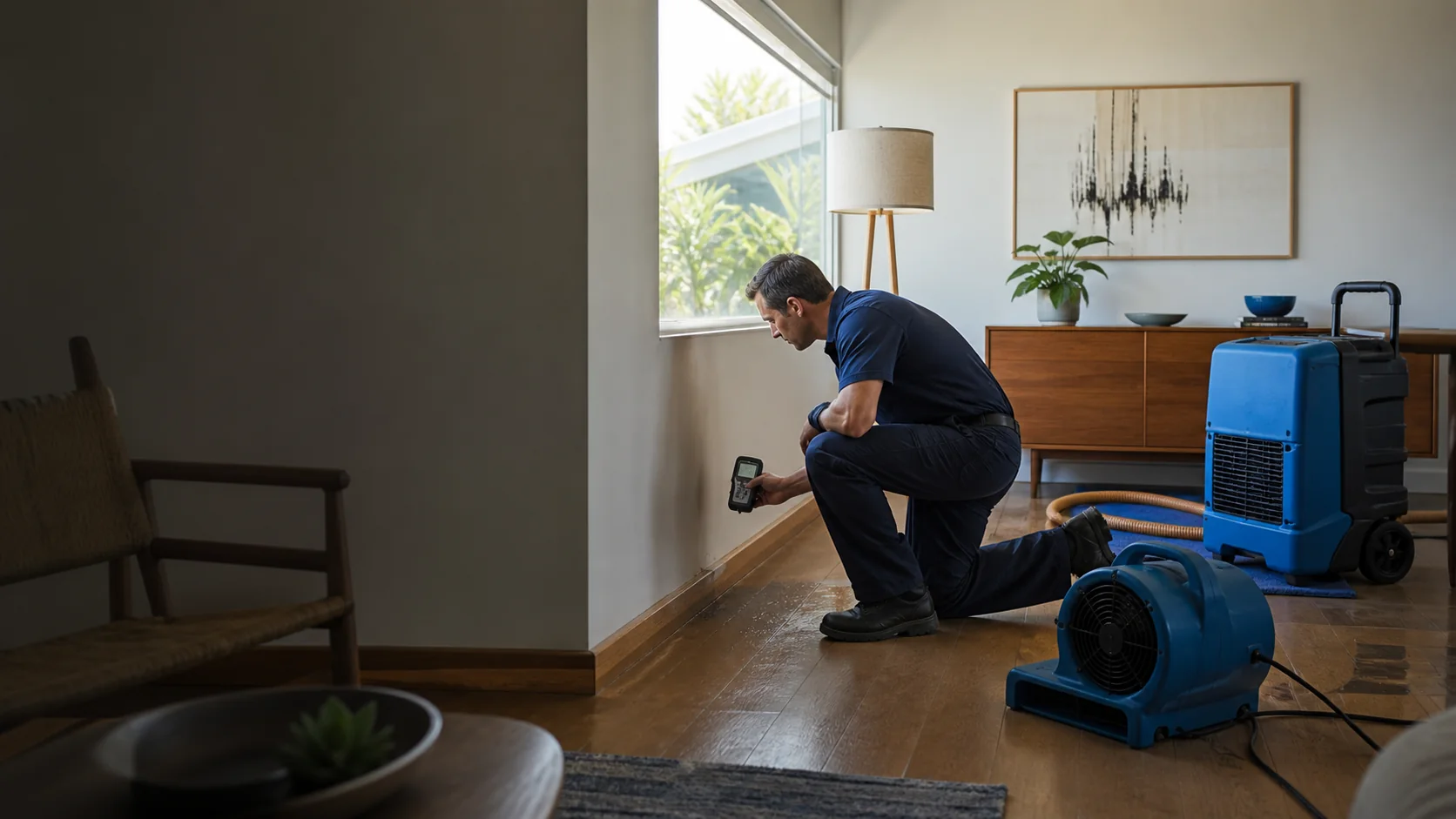
Slab leaks are common concerns in mid-century, slab-on-grade neighborhoods around La Mesa. The pipe failure may be hidden, but the water damage appears in flooring, cabinets, wall bases, or a neighboring room.
Do not begin by tearing up the first warm tile. Begin by controlling water and confirming the source.
General guidance cannot clear an unsafe property. Stay away from energized water, sewage, moving floodwater, and sagging materials.
1. Look for supporting signs
A warm floor can suggest a hot-water line leak, but sunlight, ductwork, and appliances can also change temperatures. Combine the pattern with water-meter movement, damp materials, sound, pressure changes, or a plumbing evaluation.
- Unexpected water-meter activity with fixtures off
- Warm or damp floor area
- Swollen baseboards or bubbling paint
- Released flooring adhesive or cupped wood
- Sound of water with no fixture operating
2. Limit the water safely
If a pressurized leak is likely and the main shutoff is accessible by a dry, safe route, close it. Do not force a corroded valve. Follow plumbing guidance about restoring limited water service or isolating a branch.
3. Separate leak location from damage mapping
Leak detection identifies where and why the plumbing is failing. Moisture assessment identifies where released water traveled. Those areas may not be identical. Water can move along slab joints, penetrations, under floating floors, and into wall plates.
4. Protect records and finishes
Photograph floor changes, wall bases, meter readings, and any removed pipe section. Avoid replacing flooring before the source is tested and the concrete and adjacent materials are evaluated. If a continuous floor runs through several rooms, understand the matching and repair implications before selective demolition.
5. Choose the repair sequence
The typical sequence is source isolation, plumbing diagnosis, controlled access, pipe repair or reroute, water extraction, drying and monitoring, then finish repair. A broader repipe decision depends on pipe condition, leak history, pressure, access, and plumbing advice—not on one wet spot alone.
How to apply this guide to a La Mesa property
The right response to slab leak emergency checklist begins with conditions at the building, not a generic checklist alone. Note whether the source is a pressurized supply, fixture or drain, water heater, appliance, roof, outside runoff, or an unknown pathway. Then record every room or level that may connect to it. A slab-on-grade Fletcher Hills home, a historic Rolando cottage, a Mt. Helix hillside property, and an apartment near Date Avenue may show the same stain for very different reasons. That building context determines which professional should stop the source and which finishes need closer moisture assessment.
When you request help, describe what changed and when: active flow, meter behavior, odor, warm flooring, material swelling, ceiling movement, recent rain, drain response, or a prior repair. Share whether electricity, sewage, tenants, customers, valuable contents, or limited access are involved. This allows the first conversation to focus on hazards and source control before equipment or repair decisions. For this topic, the most directly connected service paths are Slab Leak Cleanup, Water Extraction, Damage Repair. Each addresses a different phase, so ask who is responsible for source repair, mitigation, monitoring, cleaning, contents, and reconstruction.
Document the property before cleanup changes the scene. Take wide photographs, close views, and a short video that establishes the relationship between the source and affected rooms. Keep a timeline, receipts, removed parts, source-trade findings, moisture records, and written scopes. If insurance may be involved, report the event according to the policy and ask what the carrier needs before damaged material is discarded. A contractor can explain observed conditions and recommended work; only the carrier can interpret coverage.
Finally, use the repair phase to prevent a repeat. Confirm that plumbing, roofing, drainage, ventilation, or appliance corrections were tested before finishes close the assembly. Ask what measurements support dry-out, what materials were retained or removed and why, and how continuous flooring, cabinets, plaster, or historic finishes affect the repair boundary. A slab leak is both a plumbing problem and a moisture-migration problem. Address both before the floor goes back together. Call for 24/7 guidance when water is actively spreading or several rooms are affected.
- Protect people before protecting finishes.
- Stop or isolate the source when that can be done safely.
- Map the water beyond the most visible mark.
- Separate emergency mitigation from permanent repair.
- Keep one organized record from discovery through closeout.
The bottom line
A slab leak is both a plumbing problem and a moisture-migration problem. Address both before the floor goes back together. Call for 24/7 guidance when water is actively spreading or several rooms are affected.