Fire & Smoke Damage Restoration: from the first wet surface to a complete plan
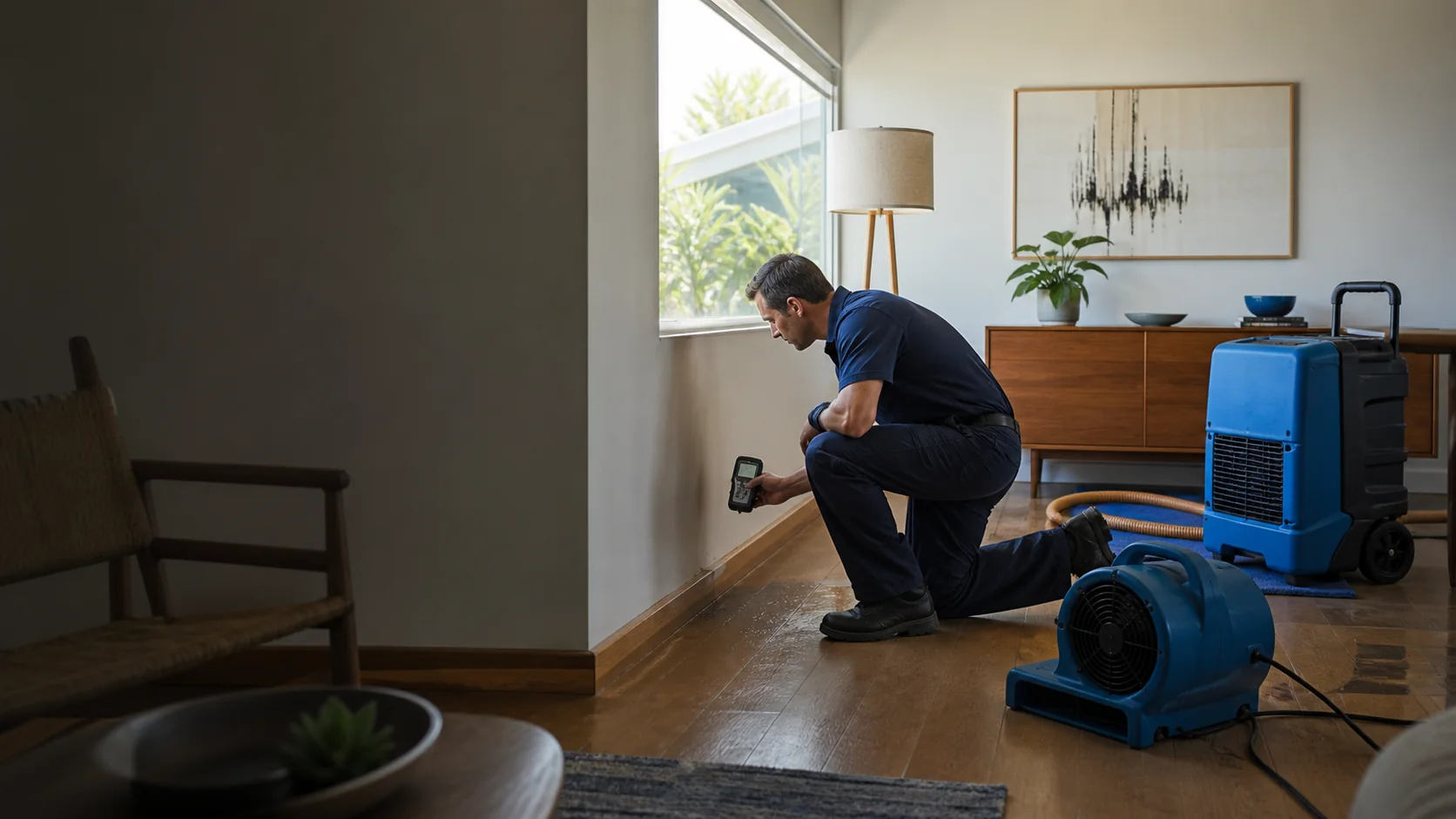
Fire losses often combine heat, smoke, soot, water, debris, and openings in the building envelope. The first priorities are official clearance, secure access, and stabilization. Water used during suppression can move into floors and wall cavities while soot settles on surfaces far beyond the room where the fire began.
Cleaning depends on what burned and where residue traveled. Dry soot, oily residue, protein smoke, and char do not respond to one universal product. Test cleaning helps define which surfaces can be restored, which contents need specialty handling, and where removal is more practical than repeated cleaning.
In La Mesa and the East County foothills, a property may also be affected by nearby brush-fire smoke or firefighting water without direct flame damage. Air pathways, attic insulation, exterior openings, HVAC components, and porous finishes should be considered in the scope.
Stay away from standing water near electricity, sewage, or a changing ceiling. Call for immediate guidance rather than entering an unsafe area.