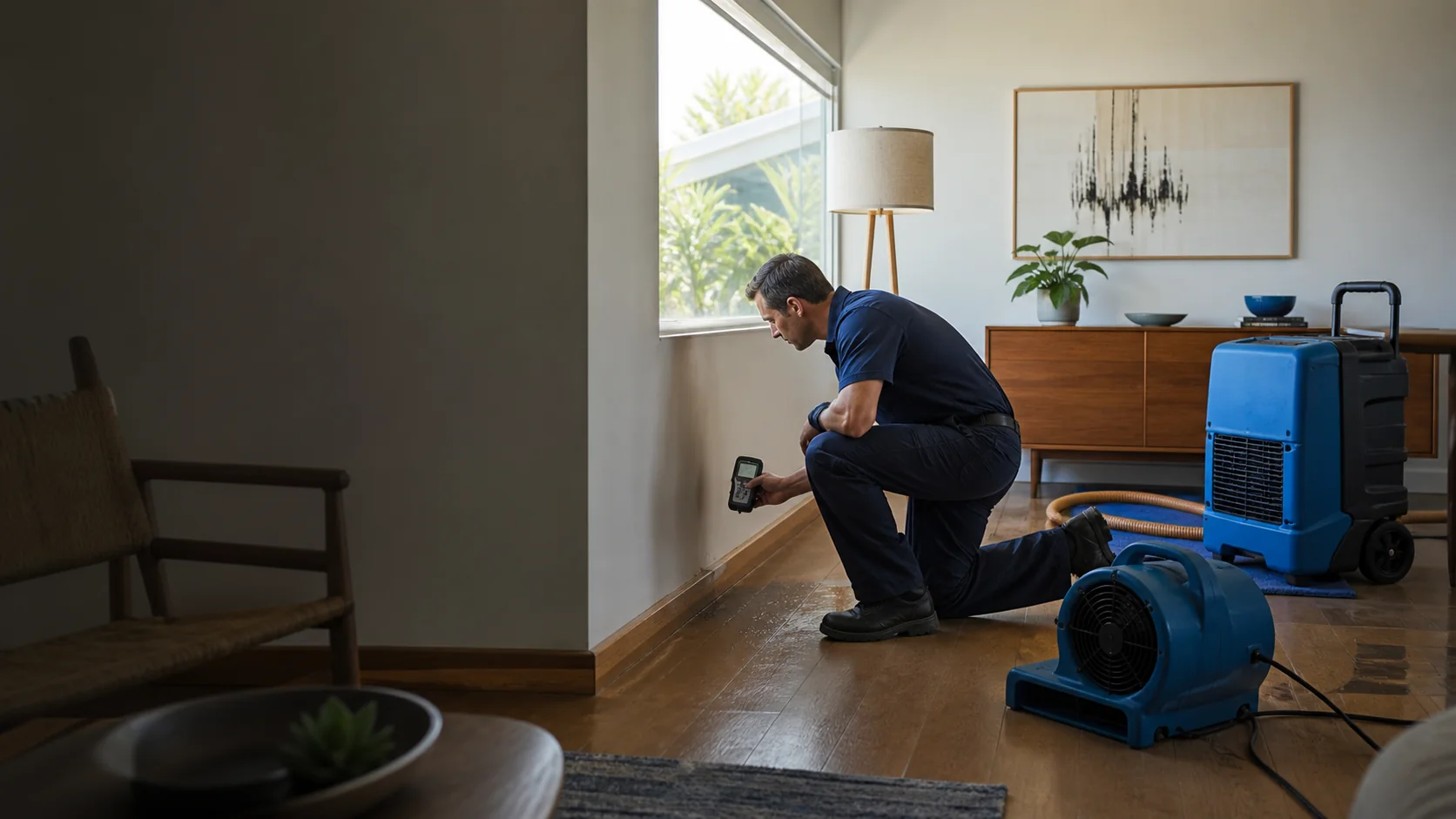
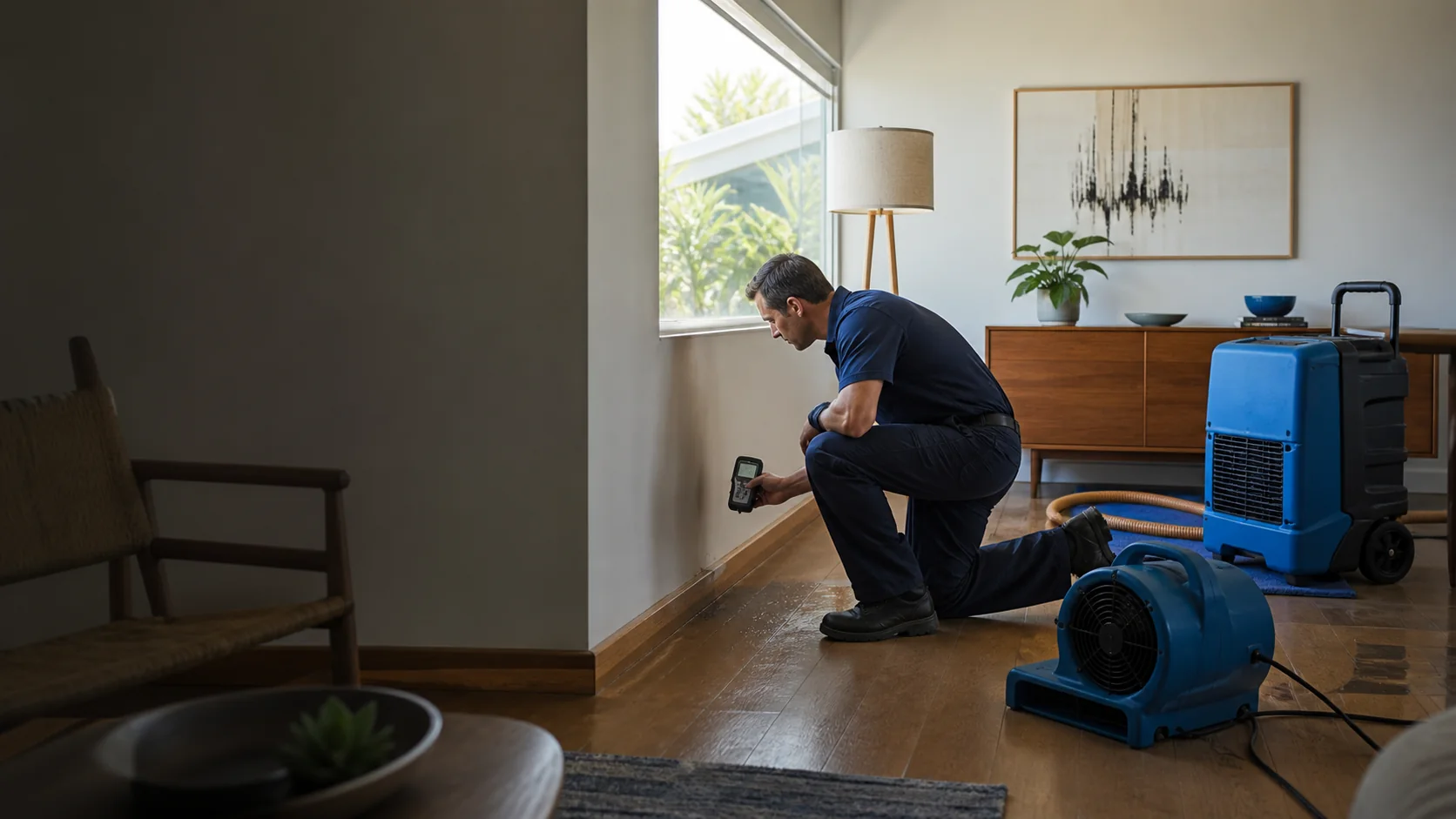
What water damage looks like around Granite Hills
When water reaches a Granite Hills property, the visible puddle is only the starting point. The source, building assembly, contamination level, and time wet determine whether materials can be dried in place or need controlled removal. Fast source control and a documented moisture plan help limit unnecessary damage.
Granite Hills contains larger lots, ranch homes, hillside properties, and semi-rural construction east of El Cajon. Long drainage paths and additions can make the source-to-damage route less direct.
Local water-loss patterns
Storm runoff, roof damage, supply leaks, water heaters, irrigation, and lower-level moisture deserve attention around slopes and retaining features.
What to document before cleanup changes the scene
For a single-family homes, apartments and townhomes, small businesses in Granite Hills, start with wide photos that show room relationships, then capture the source area, water line, floor transitions, wall bases, cabinets, and affected contents. Record when the problem was discovered, when the water stopped, and which fixtures or building systems were operating. If another unit, shared wall, attic, garage, crawl area, or lower room may be involved, include it in the first inspection rather than waiting for a stain to appear. Save plumbing, roofing, drain, or appliance findings because those source records explain why the restoration scope took a particular direction.
From dry-out to a durable repair
The assessment should follow gravity, inspect downhill rooms and exterior pathways, and preserve access for plumbing or building-envelope correction. Once the wet perimeter is documented, the next decisions should follow the material—not a fixed calendar. Concrete, drywall, insulation, cabinets, carpet, hardwood, and layered floors release moisture differently. Ask which readings will be compared over time, what access is needed, and what must happen before finishes are installed. The closeout for a Granite Hills property should connect the source correction with verified drying, appropriate cleaning, and a repair sequence that does not conceal unresolved moisture. Keep the final scope, equipment record, photos, and contents notes together for ownership, property-management, or insurance review.